When students use Google to navigate your own website, the navigation has failed. That was the reality at BYU's undergraduate catalog -- a site so difficult to move through that students had built a workaround rather than learn the system. This was the redesign that fixed it permanently.
Project Details
- Client: BYU
- Role: Lead Designer
- Team: Front-end developer, back-end developer, catalog specialists
- Live Site: catalog.byu.edu
The Challenge
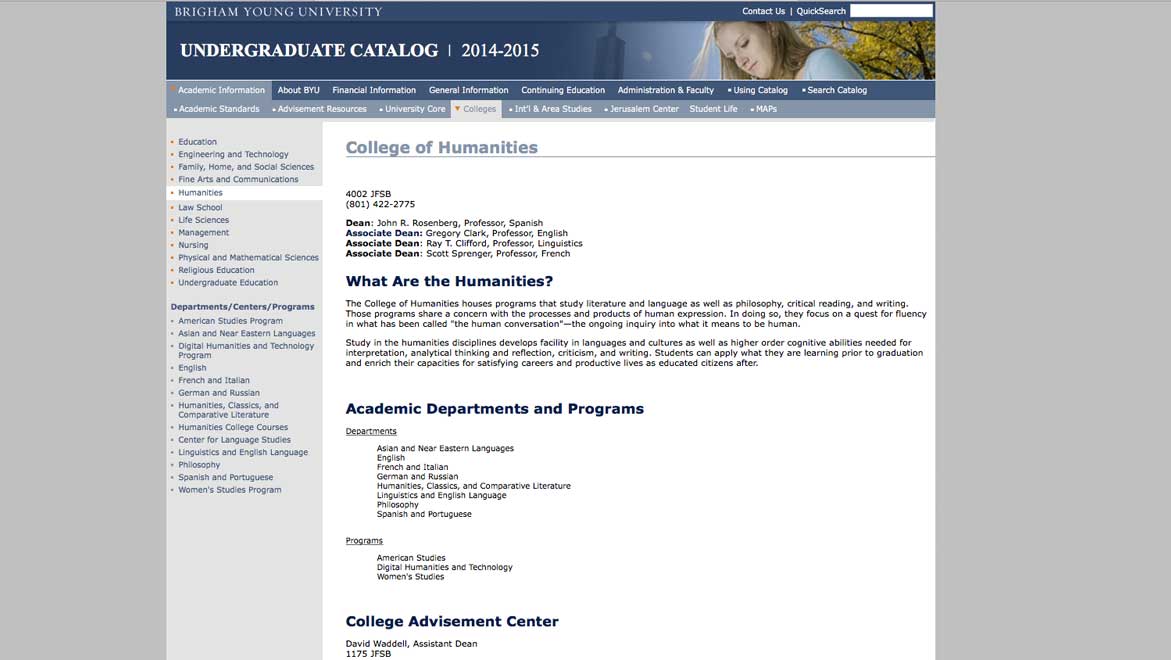
BYU's undergraduate catalog had been maintained by hand for years -- static HTML tables, updated manually each cycle, organized around how the university's departments were structured rather than how students actually looked for information. The result was a site that users consistently abandoned in favor of a Google search. Students would type "BYU English requirements" into a search engine rather than attempt to navigate the catalog itself. When users route around your navigation entirely, the problem is not their search habits -- it is your information architecture.
The Strategy
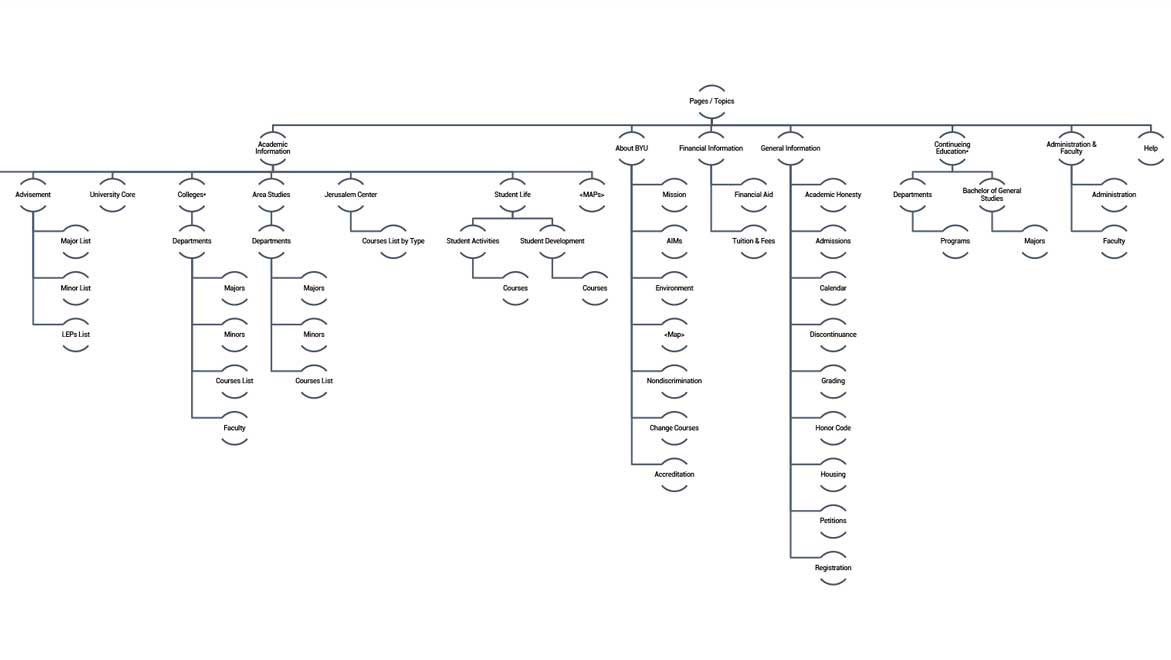
Before any design work, the team mapped and organized all of the catalog's content. Working with catalog specialists who understood how each college and department was structured, the goal was to establish a clear hierarchy that reduced exceptions and made every piece of information findable through a logical path. That IA work drove everything else: once the content was ordered correctly, the design could reflect that order rather than paper over it.
Moving the catalog into Drupal was a strategic decision as much as a technical one. It solved the immediate usability problem and eliminated the manual maintenance burden going forward -- future catalog updates would be automated rather than hand-coded.
The Execution
The IA work involved extensive meetings with catalog specialists and college representatives to determine what belonged where and how to reduce the exceptions that had made the existing structure so difficult to navigate. Once the hierarchy was settled, the content was exported and placed into Drupal for automated generation.
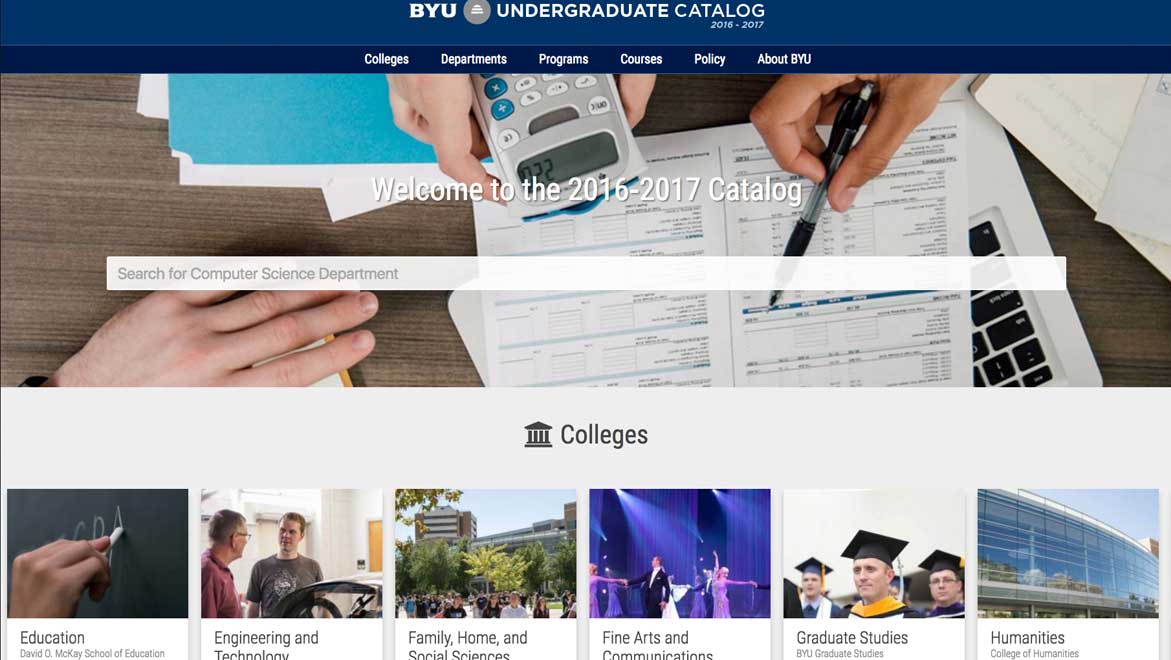
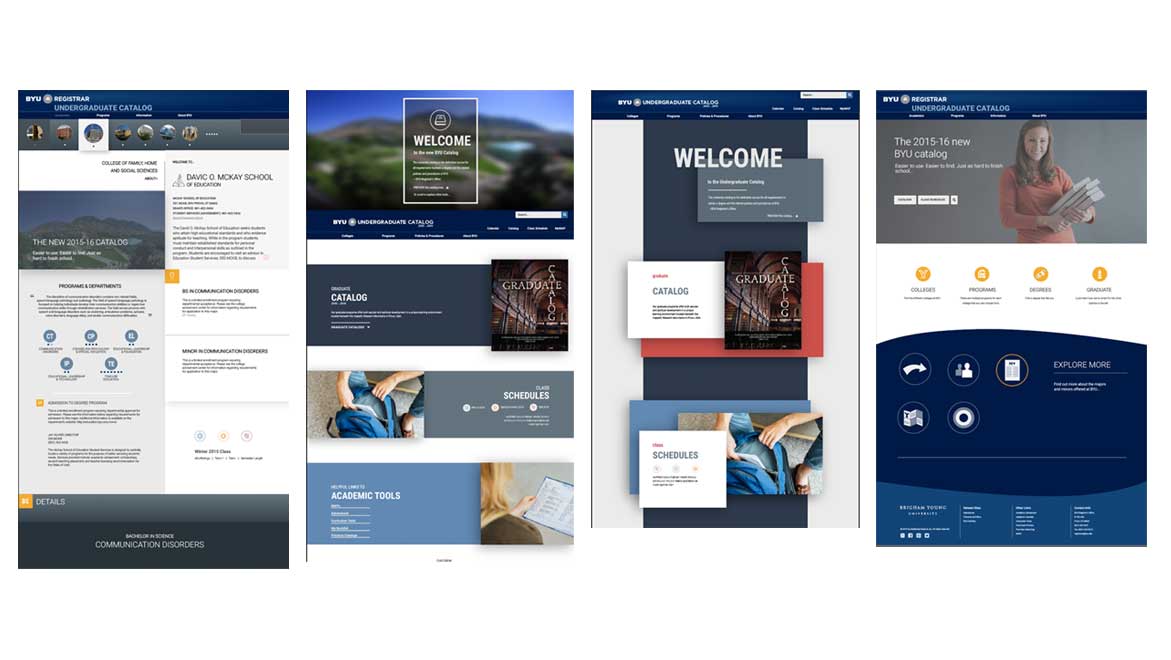
Three or four design directions were explored before settling on one that balanced the modern and the conservative -- functional enough for students searching under deadline pressure, restrained enough to satisfy the university. The search feature, which students had been replicating with Google, was given a prominent position in the interface rather than treated as a secondary option.
The Results
The redesigned catalog launched at catalog.byu.edu, replacing a decade of manually updated HTML tables with a system that generates future catalogs automatically. The students who had been using Google to find BYU course requirements now had a search function built for exactly that purpose, in the place they would naturally look for it.