Jeremy, the CEO of Assure, had spent a decade inside Special Purpose Vehicle investing. He knew every step, every form, and every point where the process broke down. After listening to him map the full SPV experience from a fund manager's perspective, one thing became clear: what the chaos theory describes seemed simple by comparison. Glassboard was built to put the entire process on a single platform -- and there was nothing else like it to reference.

Project Details
- Client: Assure
- Product: Glassboard
- Role: Lead Designer
- Scope: Sole designer — discovery, design system, UI, and developer collaboration
- Timeline: 2018–2019
-
Links:
Intro to Glassboard
Interactive Prototype
The Challenge
Private investors managing Special Purpose Vehicles were buried in administrative work. Every deal required IRS documentation, investor communications, capital tracking, and legal coordination -- all managed manually across spreadsheets and email threads. The breakdowns were costly. Investors would miss required tax forms. Communications between funding groups would fall through the cracks. Deals took longer than necessary and reporting to the IRS became a source of anxiety rather than routine. The time investors spent on paperwork was time not spent finding new deals or building the relationships that made those deals happen.
Assure saw an opportunity to solve this, but no comparable platform existed. There was nothing to reference and nothing to benchmark against.
The Strategy
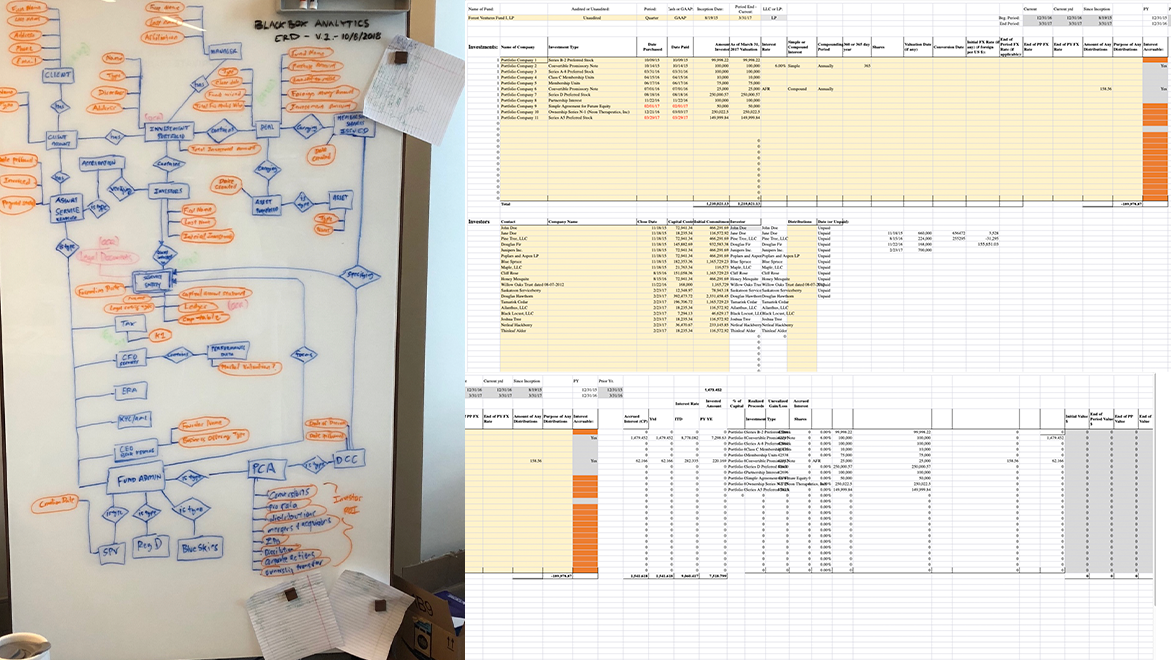
Jeremy had been directly involved in SPV investing for a decade. He was not just the client -- he was the system. The first working sessions were not design conversations. They were education: what SPVs are, why they exist, and how the funding process actually works from the inside. Then Jeremy walked through the friction points he had experienced himself, followed by the frustrations the companies and individual investors in his deals had encountered. The picture that emerged was a process held together by individual expertise and institutional memory rather than by any tool designed to support it.
The constraint was real: regulatory requirements meant certain steps could not be removed. The design challenge was making everything else as frictionless as possible, and making the required steps so clear that missing them became nearly impossible.
The Execution
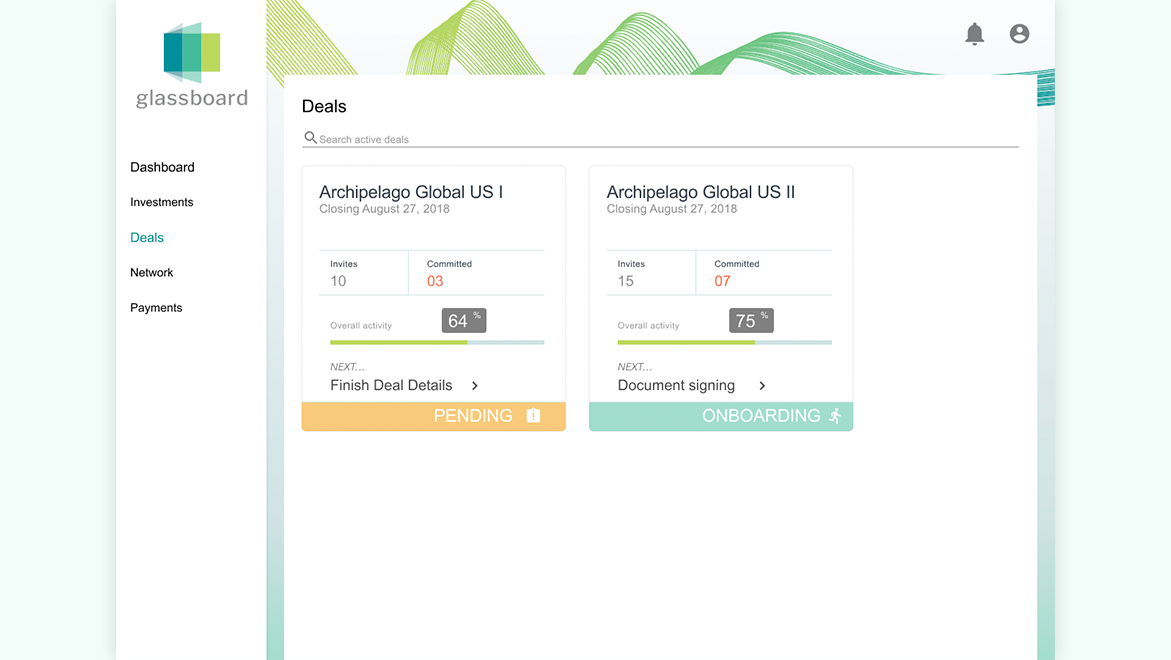
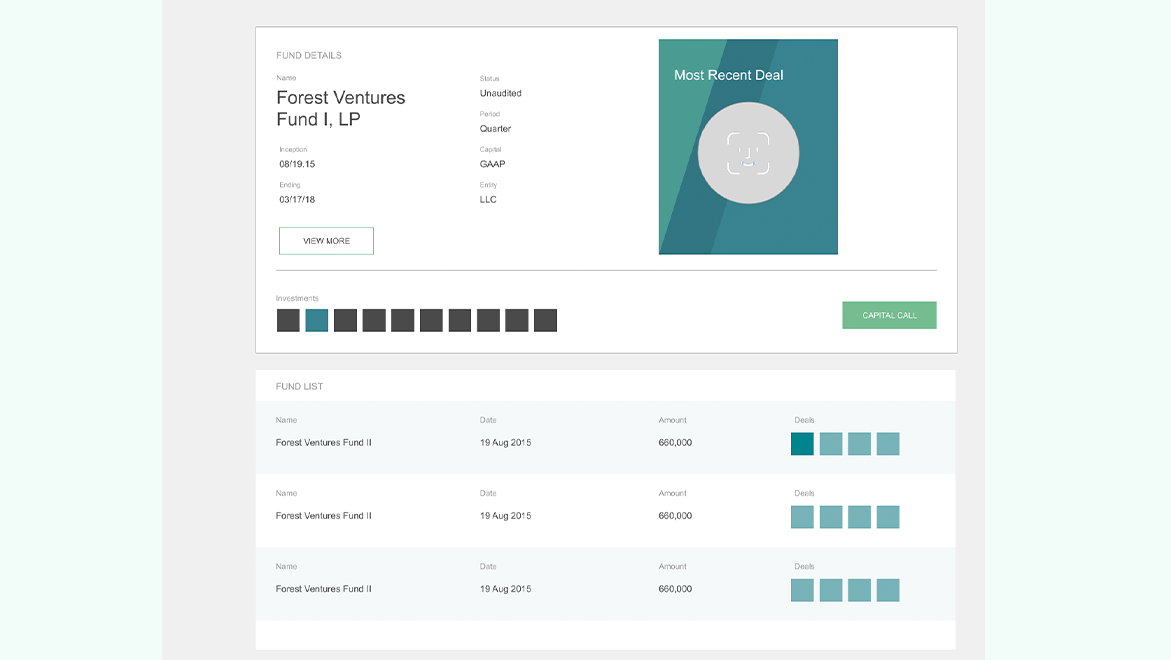
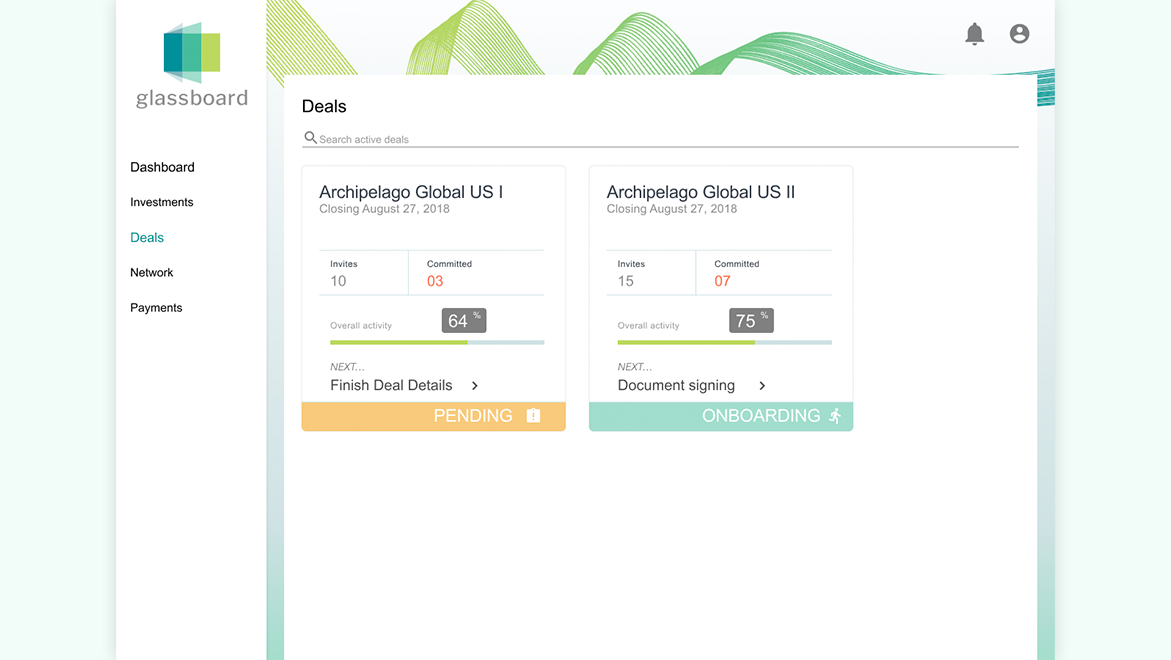
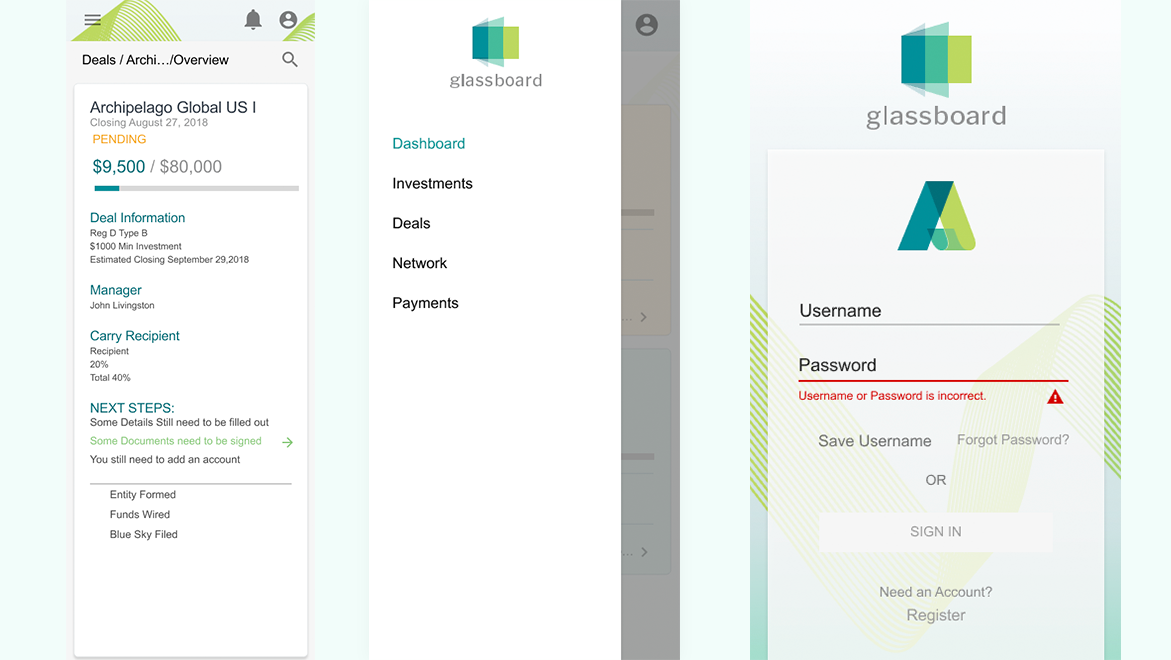
With the process externalized and mapped, the design system was built from the ground up: components, patterns, and a visual language scaled to cover a complex multi-screen platform. The product covered five core areas -- Dashboard, Investments, Deals, Network, and Payments -- each with its own information architecture and all sharing a consistent design language across desktop and mobile.
Developer collaboration ran throughout the project, surfacing technical constraints before they became expensive mistakes. The platform handled IRS documentation, deal status tracking, investor invitations, capital commitments, fund reporting, and mobile access. Prototypes were built in UXPin for stakeholder walkthroughs and developer handoff.
The Results
Glassboard launched as the first platform of its kind in the SPV investing space and became Assure's primary operating system for their full client portfolio. The measure of success was the one Jeremy had defined in those first sessions: investors managing deals end-to-end on a single platform instead of across spreadsheets, email threads, and manual paperwork. That was the job to be done. Glassboard did it.